History
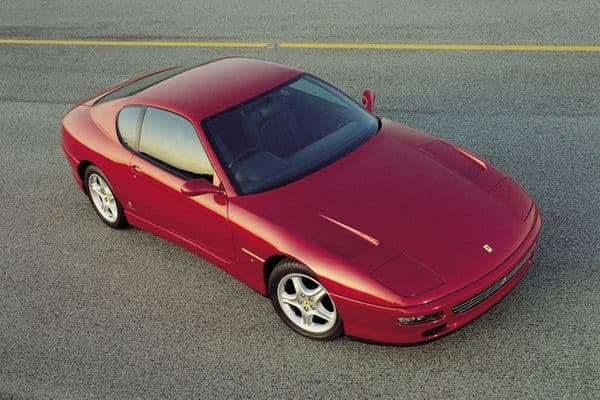
Ferrari introduced the Ferrari 456 at the Paris Motor Show in 1992 as the successor to the Ferrari 412. The name follows Ferrari’s traditional convention, referring to the displacement per cylinder. With twelve cylinders of 456 cc each, total capacity comes to approximately 5.5 liters. The 456 marked a return to the front-engined V12 2+2 grand tourer format, something Ferrari had not significantly advanced for over two decades. Production continued until 2003, with approximately 3,300 units built across two generations. In 1998, Ferrari introduced the updated 456M (Modificata), featuring subtle design revisions and mechanical improvements.
Technical Details
The Ferrari 456 is powered by a front-mounted naturally aspirated 5.5-liter V12, producing 436 hp (320 kW) at 6.250 rpm and 550 Nm of torque at 4.500 rpm. Two transmission options were available: a 6-speed manual gearbox and a 4-speed automatic developed in collaboration with General Motors. Manual cars are significantly rarer and more sought after today. The 456 also introduced improved electronic systems, including one of Ferrari’s early traction control setups. Suspension consists of double wishbones at the front and a multilink system at the rear, contributing to its stability and comfort.
Performance
The Ferrari 456 accelerates from 0 to 100 km/h in approximately 5.2 seconds and reaches a top speed of around 302 km/h. While capable of strong performance, the 456 is best understood as a grand tourer rather than a pure sports car. Its strength lies in covering long distances at high speed with ease and refinement.
Dimensions and Weight
The Ferrari 456 measures 4.730 mm in length, 1.920 mm in width, and 1.300 mm in height, with a wheelbase of 2.600 mm. Dry weight is approximately 1.690 kg. The 2+2 configuration provides genuine rear seating space, making it more practical than most Ferrari models of its era.
Design
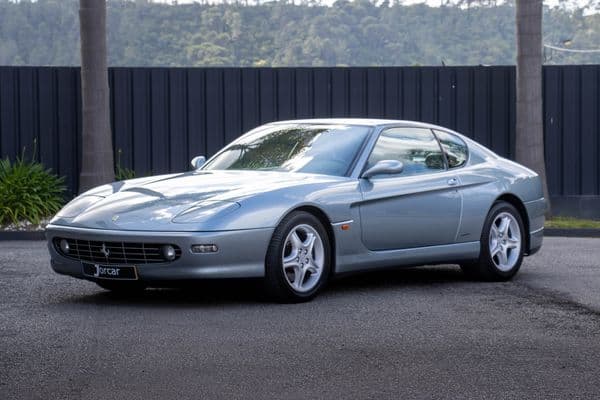
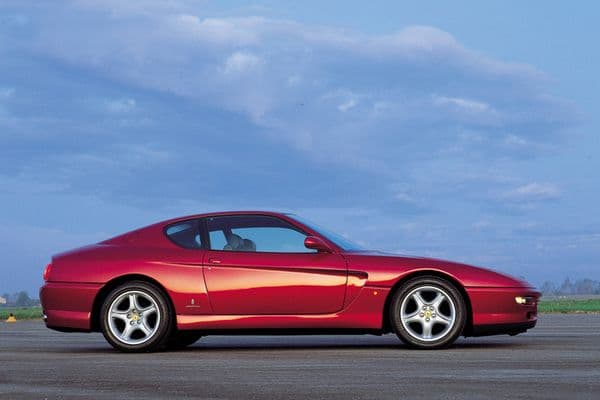
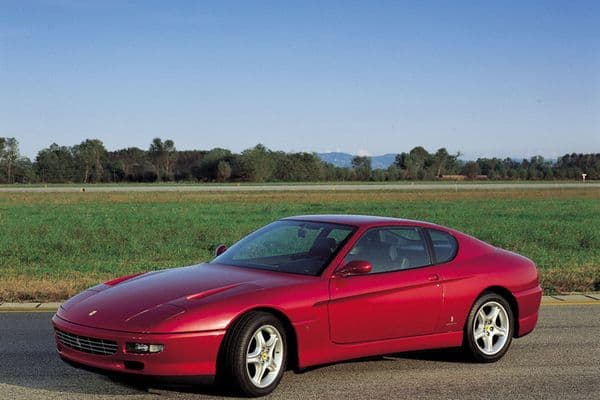
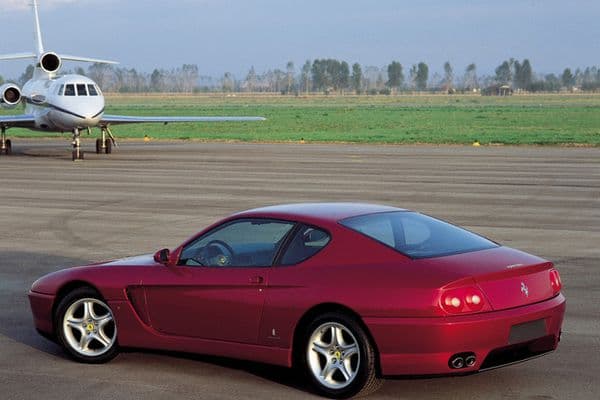
The Ferrari 456 was designed by Pininfarina and is widely regarded as one of the most elegant Ferraris of the modern era. The design emphasises proportion over aggression, with a long bonnet, flowing roofline, and restrained detailing. Pop-up headlights at the front and classic round taillights at the rear reinforce its connection to Ferrari tradition.
Interior
The interior of the Ferrari 456 focuses on comfort and refinement. High-quality materials such as leather and wood are used throughout, creating a more luxurious environment than earlier Ferrari models. Rear passengers benefit from usable seating space, while the boot offers practical luggage capacity for longer journeys.
Prices
The Ferrari 456 remains relatively undervalued compared to its significance and engineering. Prices typically start around €40.000, with well-maintained examples ranging up to €100.000 or more. Manual cars and low-mileage 456M models tend to command a premium, and values have shown early signs of upward movement as interest in analogue V12 Ferraris increases.
Images courtesy of Ferrari S.p.A.