History
Ferrari introduced the Ferrari F355 in 1994 as the successor to the 348, with production continuing until 1999. While it was later replaced by the 360 Modena, the F355 occupies a unique position in Ferrari’s history, often regarded as one of the defining V8 models of the 1990s. The car was notable at launch for its specific output of 109 hp per liter, achieved through a newly developed cylinder head with five valves per cylinder. The name “F355” reflects this configuration, referring to its 3.5-liter displacement and five-valve setup. The Ferrari F355 was available in three body styles: the Berlinetta, the Spider, and the GTS targa.
Technical Details
The Ferrari F355 is powered by a 3.5-liter naturally aspirated V8 with a displacement of 3.496 cc, producing 380 hp (280 kW) at 8.250 rpm and 363 Nm of torque at 6.000 rpm. Power is delivered to the rear wheels through a 6-speed manual gearbox. Ferrari also introduced an F1-style transmission option, using an electro-hydraulic system to operate the same gearbox via steering wheel-mounted paddles. The car was technologically advanced for its time, featuring systems such as Adaptive Dampers (ADS), which improved both comfort and handling characteristics.
Performance
The Ferrari F355 accelerates from 0 to 100 km/h in approximately 4.7 seconds and reaches a top speed of around 295 km/h. While these figures may appear modest by modern standards, the driving experience is defined by the naturally aspirated V8’s responsiveness and high-revving character. The engine delivers power progressively, accompanied by a distinctive sound that is widely regarded as one of the best of any Ferrari V8.
Dimensions and Weight
The Ferrari F355 measures 4.250 mm in length, 1.900 mm in width, and 1.170 mm in height. Dry weight is approximately 1.350 kg, with a curb weight of around 1.448 kg, contributing to its agility and balanced handling.
Design
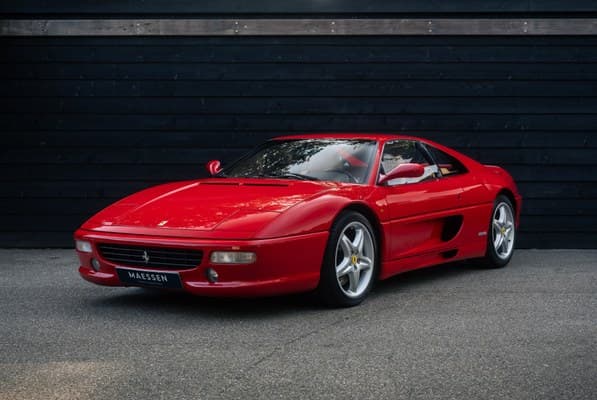
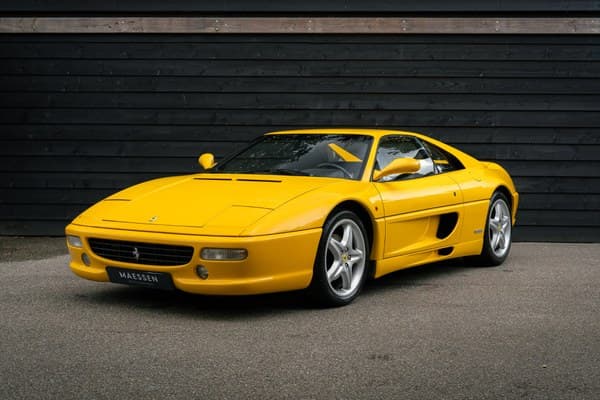
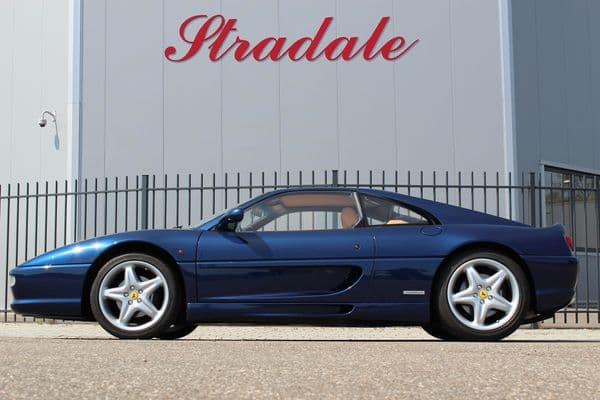
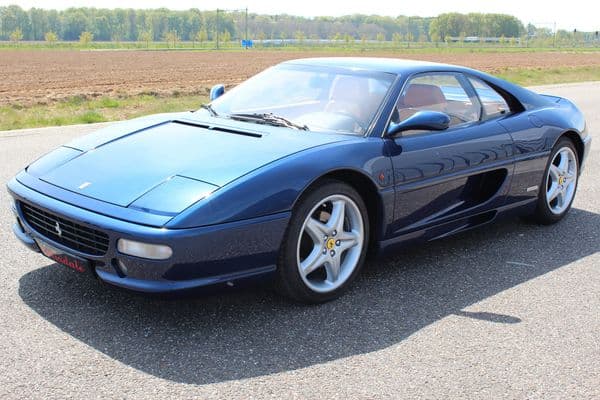
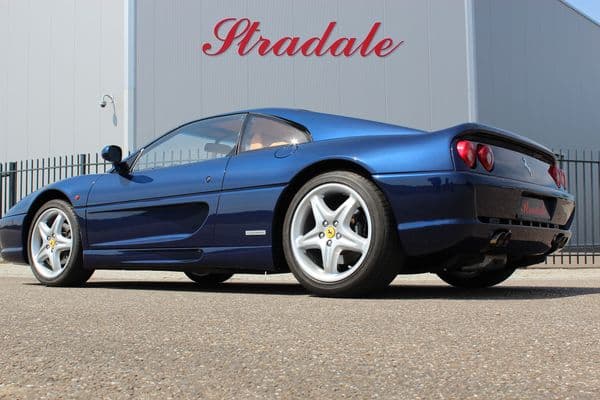
The Ferrari F355 represents the final chapter of several traditional Ferrari design elements. It was the last Ferrari to feature pop-up headlights, and its proportions reflect a classic mid-engine layout. At the rear, the signature round taillights and integrated spoiler define the car’s appearance. One of its most distinctive features is the set of flying buttresses, which frame the rear window and contribute to both structural integrity and visual identity. The overall design remains clean and purposeful, with a focus on balance rather than excess.
Interior
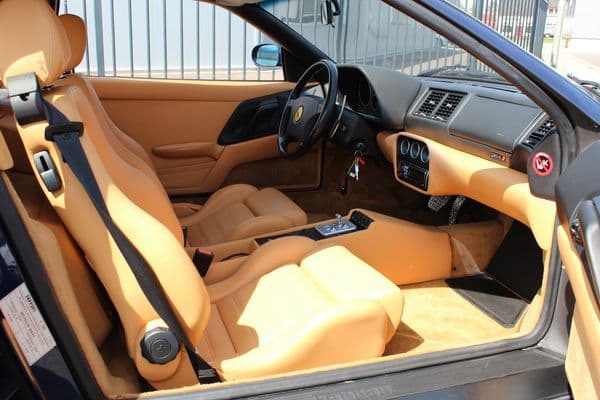
The interior of the Ferrari F355 reflects a traditional, driver-focused approach. Materials such as leather and metal are used throughout, and the presence of a manual gear lever reinforces the car’s analogue character. The layout is simple and functional, with an emphasis on driving rather than technology.
Variants
Ferrari offered the Ferrari F355 in three primary configurations. The F355 Berlinetta is the closed coupé, the F355 Spider is the full convertible, and the F355 GTS features a removable targa roof panel. All versions were available with either a manual gearbox or the F1 transmission. Ferrari also produced the F355 Challenge, a track-focused variant developed for one-make racing series, further highlighting the model’s performance potential.
Prices
The Ferrari F355 has become one of the most desirable modern classic Ferraris. Prices typically range from around €80.000 to €140.000, depending on condition, mileage, and specification. Manual gearbox examples, particularly well-maintained cars with strong service history, tend to command a premium. As appreciation for analogue Ferraris continues to grow, the F355 is increasingly recognised as a key model within Ferrari’s V8 lineage.