
History
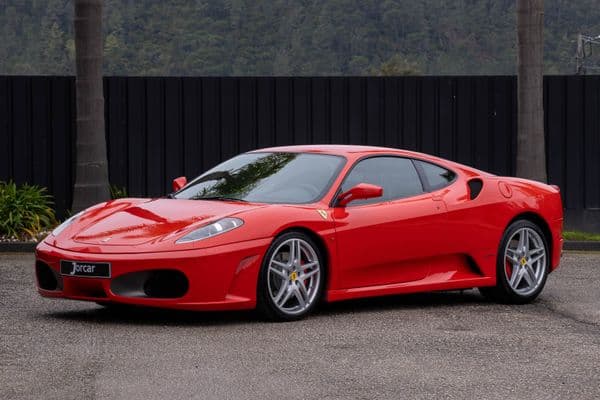
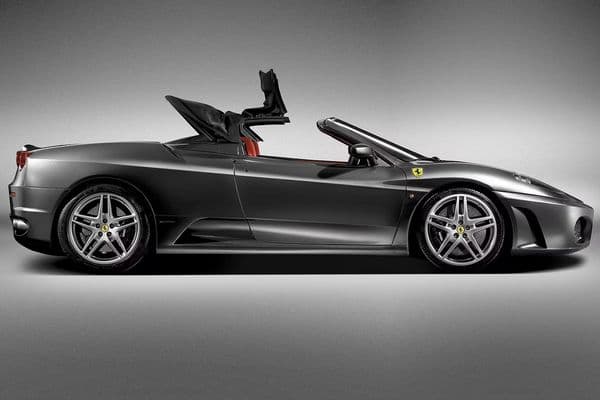
Ferrari introduced the Ferrari F430 in 2004 as the successor to the 360 Modena, continuing the brand’s mid-engine V8 lineage. The convertible F430 Spider followed in 2005. While its design appears to be an evolution of the 360, the F430 represented a significant technological step forward for Ferrari. The design was developed in collaboration with Pininfarina and Frank Stephenson, who at the time also served as design director at Maserati. In total, approximately 16.500 examples of the Ferrari F430 were produced, making it one of the more widely available modern Ferraris.
Technical Details
At the heart of the Ferrari F430 lies a 4.3-liter naturally aspirated V8, producing 490 hp and 465 Nm of torque, with peak power delivered at 8.500 rpm. The car was offered with two transmission options: a traditional 6-speed manual gearbox and a 6-speed F1 automated manual transmission operated via paddles. The Ferrari F430 introduced the Manettino switch, allowing the driver to select between different driving modes, ranging from low traction settings to a mode with all electronic assistance disabled. Ferrari also introduced the electronic differential (E-Diff), which actively distributes torque between the rear wheels to improve traction and cornering performance. Carbon ceramic brakes were available as an option.
Performance
The Ferrari F430 delivers a noticeable improvement in performance over its predecessor. The Ferrari F430 accelerates from 0 to 100 km/h in 4.0 seconds in berlinetta form and 4.1 seconds for the Spider. Top speeds are approximately 315 km/h and 310 km/h respectively. The combination of the E-Diff and the Manettino gives the Ferrari F430 a level of control and balance that makes it both accessible and highly capable, particularly under more demanding driving conditions.
Dimensions and Weight
The Ferrari F430 measures 4.512 mm in length, 1.923 mm in width, and 1.214 mm in height, with a wheelbase of 2.600 mm. Dry weight is approximately 1.350 kg for the berlinetta and 1.420 kg for the Spider, making the Ferrari F430 relatively lightweight by modern standards.
Variants
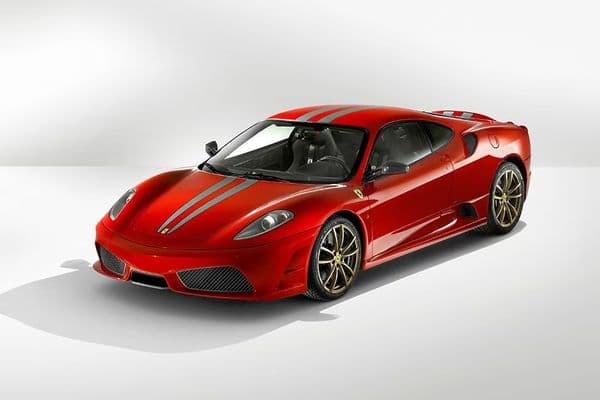
Ferrari expanded the Ferrari F430 range with more focused and performance-oriented versions. The 430 Scuderia, introduced in 2007, is a lighter and more powerful version of the standard car, developed with a stronger focus on track performance. Power increases to 510 hp, while weight is significantly reduced. In 2008, Ferrari introduced the 430 Scuderia 16M, an open-top version celebrating Ferrari’s Formula 1 Constructors’ Championship. Only 499 examples were produced, making it the rarer of the two variants. Both models feature extensive use of carbon fiber, standard ceramic brakes, and a more aggressive setup compared to the standard Ferrari F430.
Design
The Ferrari F430 was designed by Pininfarina, with input from Frank Stephenson. Its design builds on the proportions of the 360 Modena, while incorporating more advanced aerodynamic solutions. Notable design elements include larger air intakes inspired by Ferrari’s Formula 1 cars and a more aggressive rear section. The overall design reflects a shift toward a more technical and performance-driven aesthetic.
Interior
The interior of the Ferrari F430 reflects a blend of traditional Ferrari layout and modern functionality. The cabin is focused on the driver, with controls positioned for ease of use during spirited driving. The introduction of the Manettino on the steering wheel marked a significant step toward Ferrari’s now-familiar control layout. Materials such as leather, aluminum, and carbon fiber are used throughout, reinforcing the car’s sporty yet refined character.
Prices
The Ferrari F430 remains an attractive entry point into modern Ferrari ownership, particularly for those seeking a naturally aspirated V8 experience. Prices typically range from around €120.000 to €180.000, depending on condition, mileage, and specification. The more focused 430 Scuderia and the limited Scuderia 16M command significantly higher values, often exceeding €250.000, with exceptional examples reaching beyond that.
Images courtesy of Ferrari S.p.A.