
A three-seat Ferrari? Chances are, you did not even know such a car existed.
Yet in 1966, Ferrari and Pininfarina presented one of the most extraordinary concepts ever to wear the Cavallino Rampante: the Ferrari 365 P Berlinetta Speciale. Developed by Pininfarina and designed by Aldo Brovarone, it made its public debut at the Paris Motor Show, finished in a striking shade of White Gardenia. Unsurprisingly, it caused quite a stir.

A Ferrari unlike any other
The proportions were unlike anything Ferrari had shown before. Low, elegant and dramatically futuristic, the 365 P Berlinetta Speciale hinted at a new design language that would later influence the Dino. Its details were equally distinctive. The car featured a glass sunroof, an exposed fuel cap, air vents ahead of the rear wheel arches and four beautifully arranged exhaust pipes. But its most remarkable feature was found inside. The cabin had three seats, with the driver positioned centrally and two passengers seated slightly behind on either side. This unusual layout earned the car its nickname: Berlinetta Tre Posti. It was a configuration that would not truly reappear in mainstream automotive design until decades later, most famously with the McLaren F1.

Ferrari’s first mid-engined V12
The 365 P Berlinetta Speciale was not only radical in its layout. It was also a major technical milestone for Ferrari. It became the first Ferrari road-car concept to combine a mid-mounted engine with a V12. The engine was derived from the 4.4-litre V12 used in the Ferrari 365 P2 racing car and produced around 375 hp. The Tre Posti also shared several mechanical components with the 365 P2, further underlining its close connection to Ferrari’s competition machinery. At its heart was the legendary Colombo 60-degree V12, an engine family that would go on to power some of the most iconic Ferraris ever built.

Agnelli’s personal Tre Posti
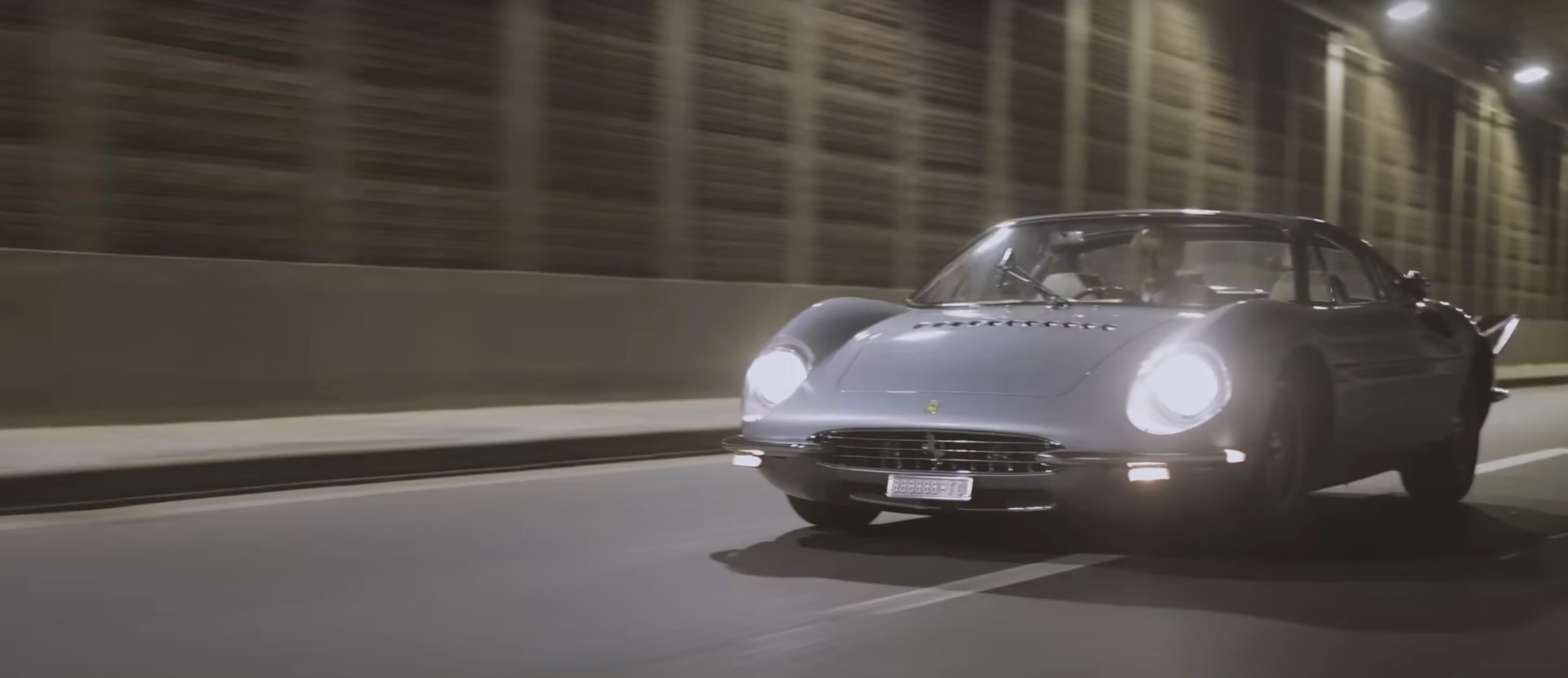
The concept immediately caught the attention of Fiat chairman Gianni Agnelli. So taken was he by the car that he asked Ferrari to build a personal example for him. His 365 P Berlinetta Speciale was delivered a year later in Turin, finished in metallic silver-grey and distinguished by a rear spoiler. It was a fitting machine for one of Italy’s most influential industrialists: elegant, unconventional and unmistakably special. Agnelli enjoyed the car for several years before it was sold to the United States. Reflecting on his time with the Tre Posti, he later said:
“You didn’t have time to stop before people were immediately around it. But it was fun. It had monstrous acceleration. You just had to get used to the driver’s seat in the middle, because it gave an ideal set of reference points to either side — right or left.”
The Chinetti car
The original white Paris Motor Show car eventually found its way to Luigi Chinetti, Ferrari’s legendary American importer. In typical Chinetti fashion, the story did not end with a straightforward sale. He famously sold the car twice, only to buy it back on both occasions. Decades later, in 2014, the car appeared at auction, where a reported bid of $23 million was declined. That refusal only added to the mystique surrounding the Tre Posti. This was not simply a rare Ferrari. It was a piece of Maranello history: a concept car, a design study, an engineering milestone and a glimpse of a future Ferrari had not yet fully embraced.

Rediscovered in all its glory
In 2024, the Ferrari 365 P Berlinetta Speciale resurfaced once again. Simon Kidston oversaw a complete restoration of the car and released a beautifully produced video showing this extraordinary three-seat Ferrari in all its glory. More than half a century after its debut, the Tre Posti remains one of the most fascinating experiments ever created by Ferrari and Pininfarina. It was elegant, technically daring and wonderfully eccentric. A Ferrari that challenged convention long before the world was ready for it. And that is exactly what makes the 365 P Berlinetta Speciale so unforgettable.

Watch: Coming Home III - The Emperor's New Car
Image credits: Ferrari S.p.A., Forzapmag.com & Simon Kidston